Summary
- Past GTA games used static NPCs with reused animations and limited variety.
- GTA 6 replaces this with modular NPC systems that build characters dynamically.
- NPCs now adapt in body, movement, and behavior based on location and context.
- Rockstar’s new approach scales variety without massive manual work.
- The city in GTA 6 feels lived-in, not just crowded, thanks to layered systems.
- This shift marks a full break from old NPC design and sets a new standard.
Open world games have always sold the fantasy of living cities. Expansive streets, dense crowds, and the sense that life continues whether the player is watching or not. Over time, maps became larger, visuals sharper, and populations denser, yet something fundamental never changed.
The people inside those worlds still felt artificial.
This was not a failure of creativity or budget. It was the result of a structural limitation baked into how NPCs have been built for decades. No studio has pushed against that limitation more aggressively than Rockstar Games, and no upcoming game highlights the problem more clearly than Grand Theft Auto VI.
The Production Model That Never Scaled
Traditional NPC pipelines treat characters as finished assets. Each NPC is authored by hand, animated against a fixed body, and assigned a predefined set of behaviors. When a city needs to feel populated, those characters are reused with surface level variation.
This approach inevitably produces the same symptoms across nearly every open world game:
- Repeated body structures that appear across unrelated districts
- Shared walk cycles and idle animations reused at scale
- Behavioral logic that feels disconnected from location or context
- Visual differences that fade the longer the player observes the world
These issues are not immediately obvious, but they accumulate. Once players begin to recognize patterns, immersion weakens, and the city starts to feel staged rather than lived in.
Why Rockstar Reached the Same Ceiling
Rockstar’s worlds have always been more ambitious than most. GTA cities are dense, reactive, and designed to produce emergent moments through crowd behavior and systemic chaos. Pedestrians panic, react, flee, and collide with systems in ways few open world games attempt.
Even so, GTA 5 eventually reveals its limits. Extended play exposes repeated silhouettes, familiar animation loops, and NPCs that feel interchangeable beneath different outfits. Despite enormous resources, Rockstar was constrained by a pipeline that scaled effort linearly. Every increase in realism required a proportional increase in manual work.
At a certain point, that model simply stops scaling.
When Bigger Worlds Made NPCs Feel Worse
For years, the industry tried to overpower the problem with expansion. Larger maps, higher fidelity characters, and denser crowds became the default solution. None of this addressed the underlying issue of repetition.
In fact, it often amplified it:
- Larger cities increased the time players spent observing NPC behavior
- Higher visual fidelity made reused animations easier to detect
- Denser crowds exposed patterns faster instead of hiding them
- Realism reduced the margin for duplication to go unnoticed
Scale did not fix NPC variety. It exposed its absence.
A Quiet Architectural Shift
Around 2019, Take Two Interactive began filing patents that focused on fundamental bottlenecks rather than visual upgrades. These systems targeted how NPCs are constructed, animated, navigated, and managed at scale.
The most important change was conceptual. NPCs stopped being treated as individually authored characters and started being treated as modular entities assembled by rules. Variety was no longer something developers handcrafted endlessly. It became something systems generated while enforcing realism and consistency.
This is the architectural shift that separates GTA 6 from previous generations.
From Crowds to Populations
When NPCs are built from modular components instead of fixed assets, scale changes entirely. A limited set of parts can generate enormous variation when governed by logical constraints. Bodies remain believable, proportions make sense, and animations can adapt dynamically.
This transition enables:
- Visual diversity that scales without exponential asset creation
- Movement that adapts naturally to different body structures
- Behavior that feels situational rather than universally scripted
At that point, streets stop feeling like crowds of copies and start functioning like actual populations.
Why GTA 6 Already Feels Different
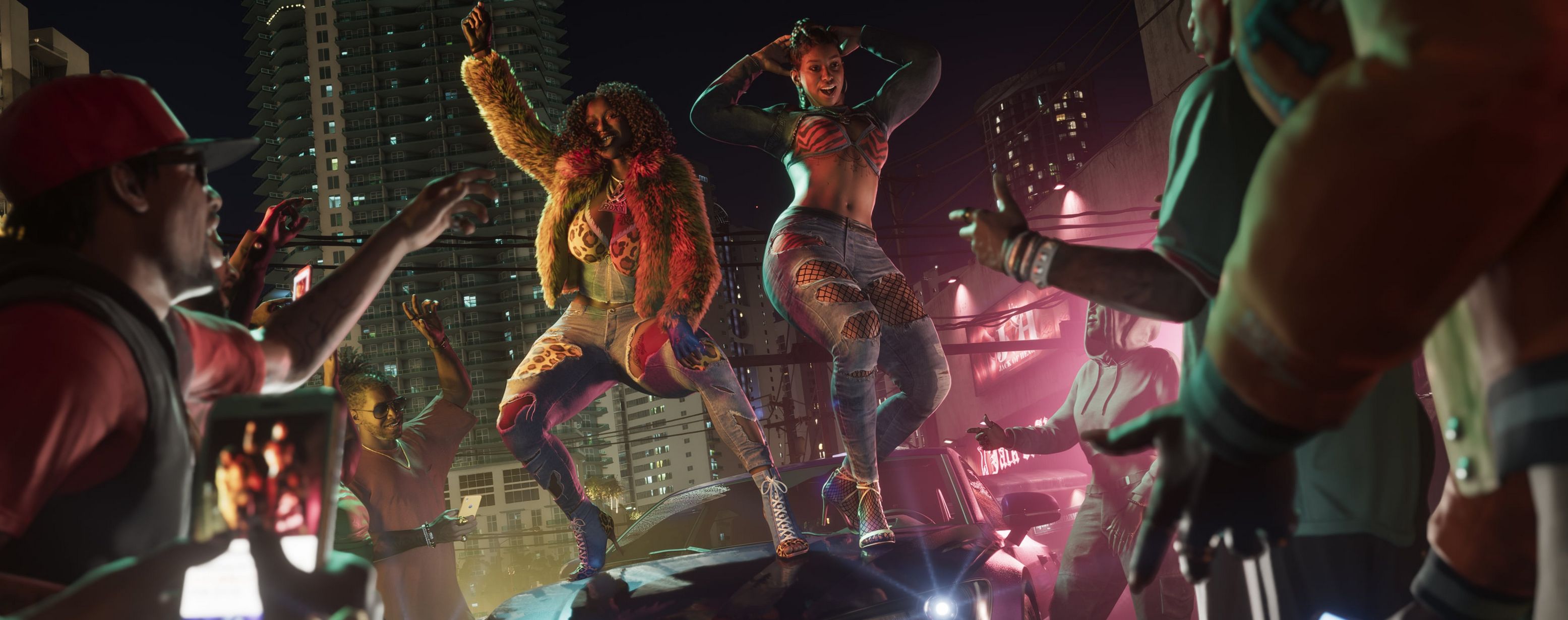
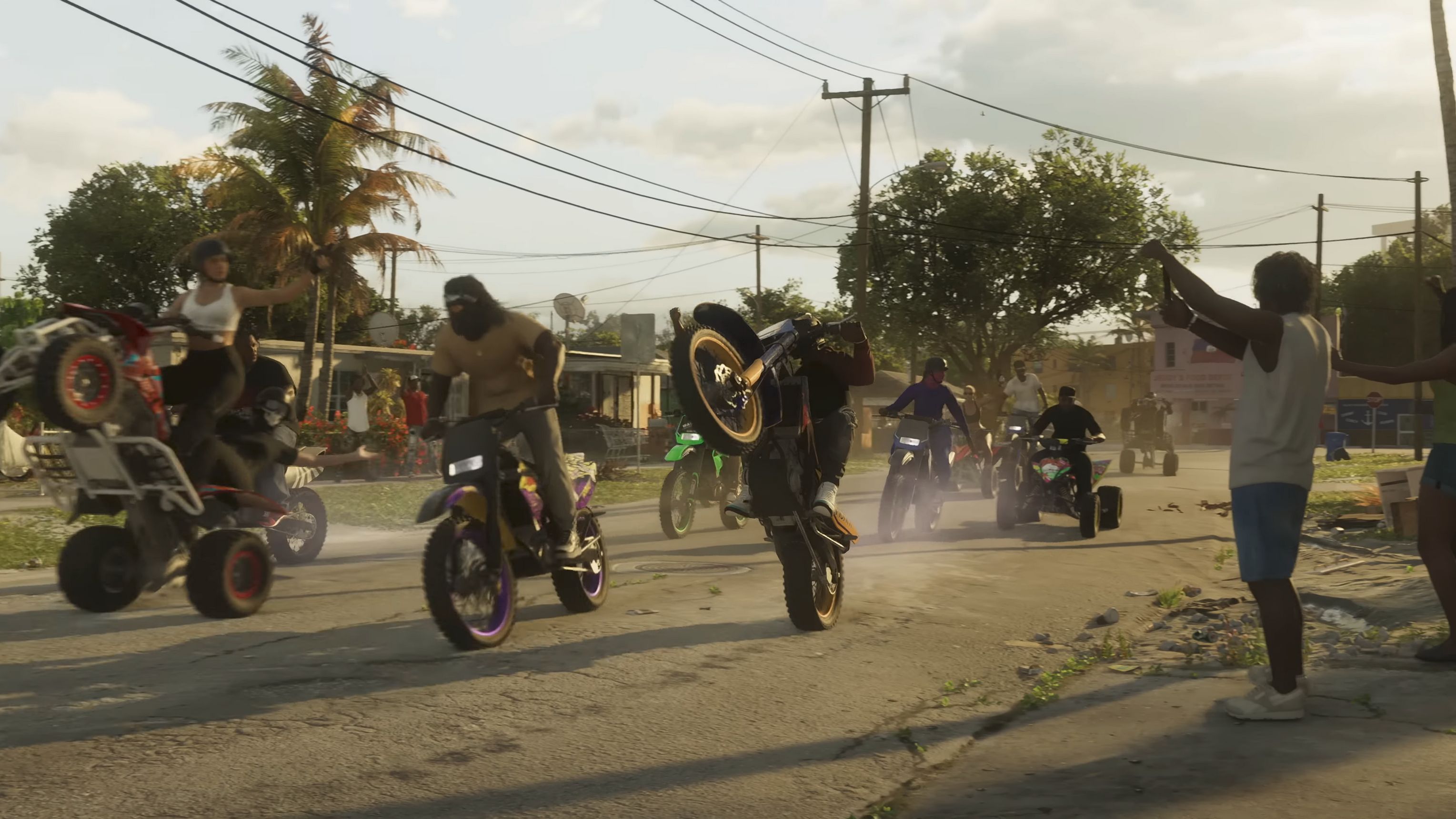
Many viewers noticed something unusual in the GTA 6 trailers without being able to clearly articulate it. The city feels dense without becoming chaotic. NPCs appear varied without looking exaggerated. Movement feels grounded without calling attention to itself.
That effect emerges when multiple systems operate quietly together. Modular bodies reduce repetition. Adaptive animation removes identical motion patterns. Behavior informed by individual traits replaces rigid scripting. None of these systems announce themselves, but together they change how the world feels.
The city stops looking populated and starts feeling inhabited.
A True Break From the Past
Every Rockstar release pushes technical boundaries, but GTA 6 stands apart because it is not refining an old approach. It is replacing it. NPCs are no longer decorative filler stretched across a map. They are the result of layered systems designed to scale human variation naturally.
If this approach is even partially active in GTA 6, players will not notice it in a single standout moment. They will feel it continuously through a city that does not repeat itself, a population that does not betray the illusion, and a world that feels alive without trying to prove it.
That is why GTA 6 already feels different, long before anyone ever touches a controller.