
Summary
- GTA 6 launches November 19, 2026, ending the longest gap between mainline GTA titles in the franchise’s history.
- AAA gaming’s last decade has been defined by live-service flops, day-one battle passes, and broken launches.
- Rockstar does the opposite: years of silence, no public roadmaps, just one massive release that reshapes the industry.
- GTA 5 made $1 billion in 3 days in 2013. Trailer 1 hit ~93 million views in 24 hours. Trailer 2 followed with 69 million.
- The real difference isn’t graphics or budget — it’s intent. Rockstar still builds details that 95% of players will never notice.
The State of AAA Gaming Is, Honestly, Kind of Bleak
Let’s just be real with each other for a second. If you’ve been gaming for the last 10 years, you’ve felt it. That slow, creeping disappointment every time a big-budget AAA game drops with a cinematic trailer that looks like a film school thesis, then launches as a buggy, hollowed-out shell with a battle pass already announced before the campaign’s even been finished. This isn’t nostalgia talking. The numbers back it up.
Live-service fatigue is no longer a fan complaint, it’s a financial reality
In 2024, one of Sony’s flagship live-service shooters launched and was pulled from sale within two weeks after reportedly selling around 25,000 copies. The studio behind it was shut down. Another high-profile live-service title was delayed indefinitely. By 2025, even Sony executives were openly admitting that their live-service strategy was “not entirely going smoothly.” That’s not an isolated incident, that’s a pattern.
The five symptoms of a broken AAA decade
The last decade of AAA development has been dominated by:
- Shallow launches disguised as live-service games, built to extract a $70 box price plus an indefinite drip-feed of microtransactions
- Battle passes announced before the game is even finished, with monetization-first and gameplay-second design
- Creative directors hamstrung by corporate pressure to find new ways to monetize every mechanic, every cosmetic, every minute of player time
- Engagement-bait design built around dopamine retention loops rather than immersion
- Day-one disasters, games that look incredible in trailers and ship in pieces
You’ve felt this. Every time you’ve booted up a game that promised the world and delivered a few hours of mild, forgettable entertainment. And against this backdrop, you have one studio doing the complete opposite.
What Rockstar Does Differently
Rockstar Games doesn’t talk to you for years. There’s no quarterly developer roadmap, no “season pass preview,” no community manager doing damage control on Twitter every Friday. They drop one industry-shaking trailer, then go silent for six months. Then another. Then the game launches and reshapes the entire medium.
Silence as a marketing strategy
This approach is borderline radical in 2026. Most publishers are terrified of silence. Silence means the audience might forget you exist, might move on to the next thing, might log fewer engagement hours this quarter. So they fill every gap with content like devlogs, “deep dives,” ARGs, and marketing stunts, most of which add nothing and dilute the actual product.
Rockstar’s bet is the opposite: if the game is good enough, the silence becomes the marketing. Every leak, every rumor, every frame-by-frame trailer breakdown becomes free hype because the audience trusts that the eventual delivery will be worth the wait.
They’ve earned that trust the hard way
Red Dead Redemption 2 was developed by a team of roughly 1,600 people across multiple Rockstar studios over nearly eight years. Horses had 16 different muscle groups that responded individually to terrain. NPCs remembered if you’d been rude to them three in-game days earlier. Snow accumulated on Arthur Morgan’s coat in real time and melted near campfires.
Almost none of that mattered for “completing” the game. You could play through Red Dead 2 from start to finish and never notice 90% of what the development team actually built. That’s the point.
The ‘Just In Case’ Philosophy
There’s a phrase that captures what Rockstar does better than anything else: “just in case.” They’ll spend weeks of dev time on a single environmental detail, like a specific lighting condition at dusk in one corner of the map, or a small interaction between two NPCs that only triggers if you happen to be standing in the right spot at the right time. Most players will never see it. They build it anyway.
The reasoning is simple. Just in case someone, somewhere, on their fourth playthrough, in the right mood, at the right time of day, happens to walk past and notice. Because that one detail might be the thing that flips them from “playing a game” to “existing somewhere else entirely.”
Why almost no other studio works this way
This is not the dominant philosophy in modern game development. It’s expensive. It’s slow. It doesn’t show up in quarterly investor reports. Most studios either don’t have the financial runway to operate this way, or they have leadership that wouldn’t approve it even if they did. And that’s exactly why GTA 6 matters in a way that goes beyond the marketing numbers.
The Difference Between a Game You Play and a Place You Go
There’s a meaningful gap between a game you’re playing and a place you’re inhabiting. Most games, even some genuinely great ones, never close that gap. You’re aware you’re holding a controller. You’re aware of the HUD, the load times, the stitching between mechanics. There’s a thin layer of glass between you and the world.
How Rockstar removes the glass
Rockstar games at their best have a way of removing that glass entirely. You stop thinking about playing and start thinking about being there. If you’ve felt that sensation even once in your gaming life, you know exactly what I mean, and you’ve been chasing it ever since.
For a lot of us, that feeling first showed up on GTA: San Andreas on the PS2. Two friends crammed onto the edge of a twin bed, eyes glued to a 24-inch CRT. The folded-up paper map from the box. Tom Petty’s “Running Down a Dream” playing on K-DST as you tear down a Los Santos street in a Super GT.
For others, it was Niko Bellic’s first walk through Liberty City in GTA IV, or Arthur Morgan riding into Saint Denis at sunset in Red Dead 2. The exact moment differs, but the feeling is the same, and almost no other studio in the industry consistently produces it.
Why GTA 6 Is Built to Hit Different
The numbers around GTA 6 are obviously absurd, and we’ll get to those. But the reason the game feels different has nothing to do with the marketing budget. It’s the reason genuine gamers are circling November 19, 2026 on their calendars and quietly figuring out how to take that day off work.
The four things you can reasonably expect from Rockstar
Rockstar is one of the only studios left in AAA gaming where you can reasonably expect:
- The game will actually launch in a finished state. No “we’ll patch it later.” No 30GB day-one update because they shipped half a game.
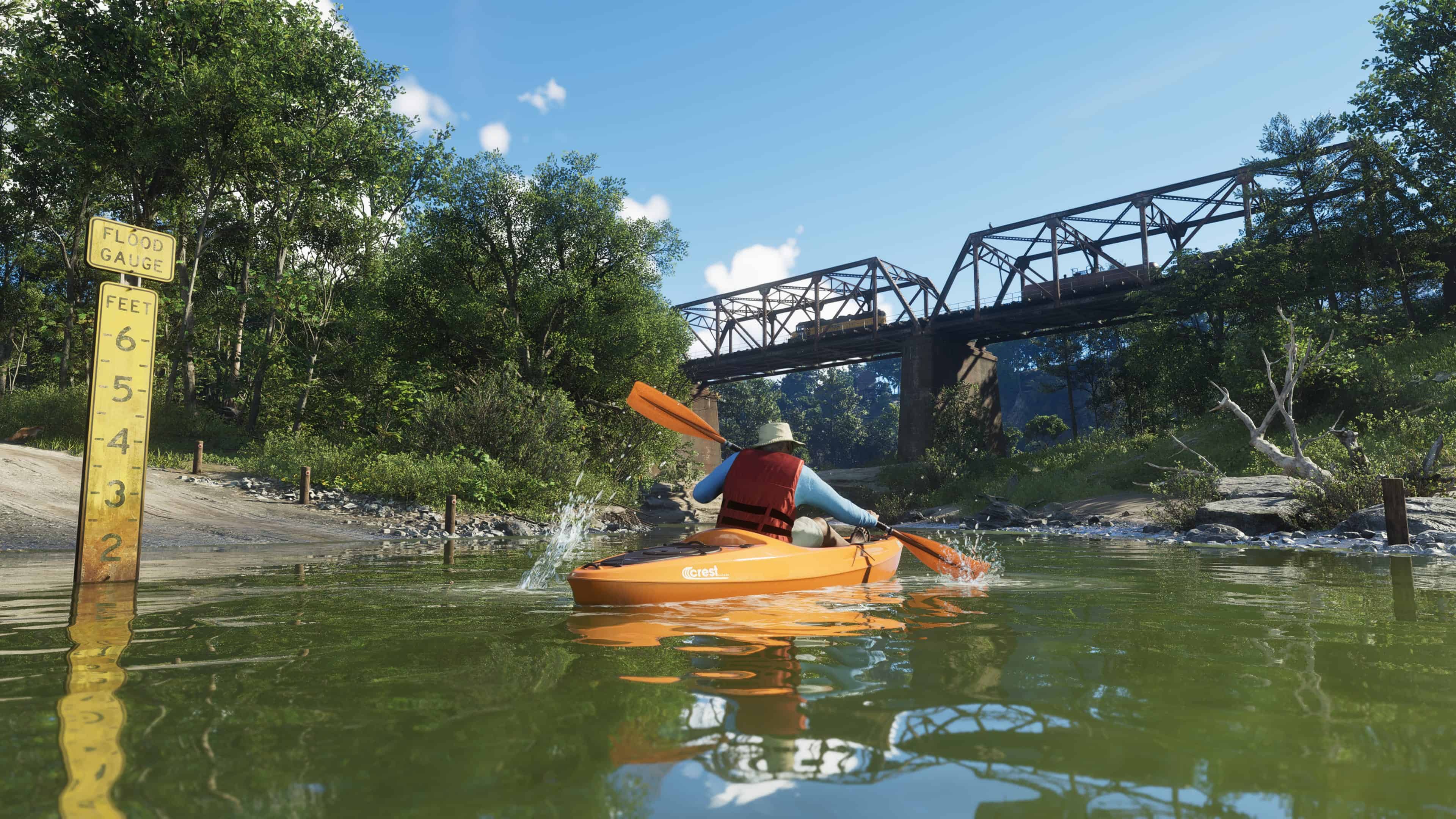
- The world will feel built, not assembled. Ecosystems run in the background whether you’re watching or not. Water physics exist because they should exist, not because they’re a checkbox feature.
- Monetization will not be the design priority on day one. GTA Online will eventually become a money machine, sure. But the single-player campaign will be the campaign, not a 25-hour tutorial for a battle pass.
- The cultural impact will be real. GTA 5 became a permanent fixture of pop culture for a decade, and there’s no reason to think GTA 6 won’t do the same.
This isn’t blind fanboyism. Rockstar is far from perfect, and the labor history alone is worth its own conversation. But on the specific question of whether the finished product will respect your time and money, they have a track record that almost nobody else in AAA can match.
Yes, the Numbers Are Going to Be Insane
For context on the scale we’re talking about:
- GTA 5, released in 2013, made over $1 billion in its first 3 days of retail sales. At the time, it was the fastest any entertainment product in history had ever crossed that mark.
- GTA 6 Trailer 1 pulled in roughly 93 million views in 24 hours, the most-viewed non-music YouTube upload ever in that window.
- Trailer 2 followed up with 69 million views in 24 hours, a number that would be a record for almost any other property.
- Economists have published serious think pieces estimating the productivity loss from launch-day sick calls.
- Take-Two has publicly defended the November 19, 2026 release date as final, even hinting at a potential premium price point.
These numbers are wild, but they’re not why the game matters to actual players. They’re a side effect.
The reason GTA 6 matters is that it’s potentially the last AAA release of this scale built under the old philosophy: a single, complete, obsessively detailed world made by a studio that still believes in “just in case.” If it lands the way Red Dead 2 landed, it won’t just be the biggest entertainment launch in history. It’ll be a reminder of what AAA gaming was supposed to be all along.
Frequently Asked Questions
Why does GTA 6 feel different from other AAA games?
Most AAA games are now built around live-service monetization first and gameplay second. Rockstar still designs single-player worlds as the core product, with environmental detail and immersion treated as priorities rather than checkbox features.
What is Rockstar’s “just in case” philosophy?
It’s their habit of investing serious dev time into details that 95% of players will never notice. The point isn’t completeness, it’s the rare moment where one of those details turns a game you’re playing into a world you’re inhabiting.
Is the AAA gaming industry actually in trouble?
The pattern is hard to ignore. Multiple high-profile live-service titles have flopped or been delayed since 2024, and even Sony has publicly admitted its live-service strategy isn’t going as planned. Player fatigue with broken launches and aggressive monetization is now a financial reality, not just a fan complaint.
Will GTA 6 have a battle pass or live-service hooks at launch?
Based on Rockstar’s track record, no. GTA Online will almost certainly return after launch, but the single-player campaign is expected to ship as a complete, standalone experience rather than a tutorial for a monetized economy.
Why does Rockstar stay silent for so long between updates?
It’s a deliberate strategy. Most publishers fill the gap with constant content because they fear being forgotten. Rockstar’s bet is that if the final product delivers, the silence builds anticipation instead of killing it, and so far it’s worked every time.